
Fire Destroys Centerpiece Of Santana Row Development Weeks Before Opening
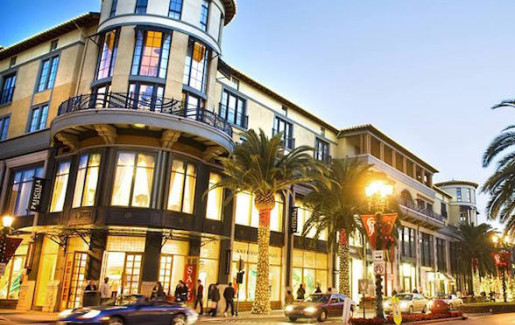
A fire destroyed the main centerpiece of this REIT’s Santana Row Development, a thirty-eight acre mixed retail and residential project.
Our construction team had little experience related to fire restoration and Bill’s experience and knowledge helped to save time and money. Thanks in part to Bill’s guidance, we were able to open the remainder of Santana Row on November 7, 2002, less than three months after the devastating fire...With Bill at the property, our development, marketing, and operations personnel were able to use Bill as the “go-to” person with any questions relating to the fire insurance claim. This allowed our staff to focus on getting the project open and operating, rather than worry about the insurance claim...Finally, Bill was an enormous resource and advocate in our claim with the insurance company. Bill’s vast experience, advice, and daily commitment were extremely valuable in our effort to finalize the insurance claim for Federal Realty Investment Trust. Without Bill and the rest of the team, I am confident we would not have been able to resolve this $125 million plus negotiation in less than 14 months, an enormously fast timetable for a claim of this size.
Description
This publicly traded company had invested $750,000,000 in this project, which represented over 25% of its capitalization. The project was to have opened within six weeks of the fire. Over 550,000 square feet were burned in less than six hours; 276 luxury apartments and villas and 60 street retail stores were destroyed.
Issues
- The project, which had been under construction for twenty-six months, had to be opened no later than three months post loss to satisfy the lenders and retain the retail tenants.
- The property was unavailable for remediation and mitigation efforts for two weeks post loss while ATF and other agencies probed the cause and origin of the fire. When the property was released, it was found to be heavily contaminated with water and mold.
- The property, which was under construction at the time of loss, had to be both mold-abated and repaired simultaneously. A strategy of mold abatement to open construction and accelerated construction (three shifts, 24 hours a day, seven days a week) had to be developed and instituted.
- The Project required tens of millions of dollars immediately in order to try to salvage the investment. The insurance company disputed the terms of the course-of-construction policy.
- The Project had scheduled the construction in phases. When the main center of the Project was destroyed, a decision was made by the owners to cease construction on the other planned phases of the Project and recall the tradesman to focus repairs on the main center. Once the main center was repaired, the subcontractors, who were contracted to build-out the final phases of the Project were committed to other scheduled work. The Owners were then forced to pay increased costs to build-out the final phases of the Project. Who was responsible for these increased costs?
- The owners of the project financed a bond to fund the construction of the Project. The bond offering was scheduled but postponed due to the fire. After the fire, the owners were forced to offer the bond at an increased cost to make the bond attractive to investors. The insurer only wanted to pay for twelve months (the maximum period of loss of income) of the thirty-year life of the increased bond expense. Under the terms of the contract of insurance, when was this increased expense incurred? Was indemnity limited to twelve months?
Solutions Applied
- Federal Realty Investment Trust retained a joint venture of The Greenspan Co./Adjuster International (Greenspan) and Goodman, Gable, & Gould/Adjusters International (GGG) firms. The loss location was in San Jose, California and the REIT’s home office was in Rockville, Maryland. The Adjusters International (AI) team could then be in place at both locations during the entire recovery period to provide a continuity of representation on behalf of the insured.
- Greenspan & GGG instituted a regular weekly meeting with the Project’s architects, engineers, general contractors, the owners, the insurers, their accountants, construction experts, and the insurer’s legal counsel. Goals, organizational protocols, issues, communication, and funding were discussed every five-business days. This weekly meeting system provided ‘transparency’ for the insurer, who became comfortable enough through this real time communication, to issue close to $50,000,000 within three months of the loss to allow immediate repairs. The Project opened in time for the
Christmas Holiday season enabling the street-retail to capture the most profitable period of the year. Greenspan & GGG worked closely in both the loss location and Federal Realty Investment Trust’s home office with the insurers’ adjusters, construction experts, forensic accountants, economists, and attorneys to identify and document the claims satisfactorily and to deal with issues of construction acceleration, construction inefficiencies, tenants improvements and betterments, regulatory requirements, loss of income, and loss of market, as these losses were quantified and measured. - Through a detailed analysis of the planned phases of construction, a quantification of by-trade projected expenses contrasted by actual by-trade expenses was calculated by the AI team. The delta between the projected construction budget by-trade and actual expenditures by-trade was compared to other projects the owner had developed to establish the owners’ efficiency of cost projections. The insurer then accepted the delta of costs as a direct result of the insured periled and paid this construction inefficiency portion of the claim.
- Economists documented the increased cost of the bond offering as caused directly by the fire. The AI team then directed case law research regarding precedent law concerning the functional meaning of “incurred” in loss of earnings forms identical to that, which was issued to the owner by the insurer. Adjusters International then persuaded the insurer that the entire thirty year increased cost of the bond offering was incurred at the moment of the insured peril. The insurer agreed to provide indemnity for the entire thirty-year increased bond expenses as incurred during the twelve-month suspension
period of loss of earnings. - In less than 14 months, Greenspan & GGG amicably negotiated and received payment of $129,000,000.00 on behalf of Federal Realty Investment Trust. Chief Executive Officer Don Woods announced to the financial community that AI was the critical component of the opening of Santana Row and the expedited complete insurance recovery. This REIT’s stock valuation has now doubled since the opening of Santana Row.